Wondering if your Hampstead waterfront home will sell on the strength of the view alone? In today’s market, buyers usually want more than a beautiful shoreline setting. They want a home that feels well cared for, priced realistically, and backed by clear documentation. If you are thinking about selling, a little early prep can help you avoid delays, reduce buyer concerns, and make your property stand out for the right reasons. Let’s dive in.
Why prep matters in Hampstead
Hampstead buyers are still active, but they are not rushing past details. Realtor.com’s Hampstead market snapshot reported a median home sale price of $500,000 and 96 days on market in December 2025, while Zillow’s February 2026 snapshot and other public data points suggest a market that requires patience and careful positioning.
That measured pace matters if you are selling a waterfront property. Realtor.com also reported that homes in Hampstead sold for about 1.03% below asking on average in February 2026, which tells you pricing and presentation still matter. A water view is a major asset, but buyers may still look closely at condition, permits, flood details, and shoreline features.
Start early for a spring listing
If you want to aim for the strongest buyer activity, spring still makes a strong case. The National Association of Realtors reports that existing-home sales typically rise 33.5% in March versus February on average, and Realtor.com identified April 13 through 19 as the strongest national listing window in 2025.
That does not mean you should wait until spring to begin. The same NAR and Realtor.com guidance supports preparing ahead of time, and Realtor.com notes that many sellers spend one month or less getting a home ready. For a Hampstead waterfront home, late winter is often the smart time to handle inspections, repairs, paperwork, and staging plans before you go live.
Gather flood documents first
Waterfront buyers often ask practical questions early. One of the biggest is whether the home is in a flood zone and what that could mean for insurance, building standards, and future improvements.
Pender County states that FEMA-approved flood maps adopted in January 2025 took effect on January 17, 2025, and that flood zones expanded in many areas because of higher base flood elevations. The county also notes that flood maps help determine flood insurance cost, which makes your flood-related records especially important when preparing to sell.
Before listing, try to gather:
- Elevation certificate, if available
- Flood insurance information
- Records of any prior flood-related permits or repairs
- Documentation tied to past drainage or mitigation work
Pender County’s floodplain guidance also says all building in the floodplain requires a Flood Development Permit. Even if you are not planning new work before selling, having your records ready can help you answer buyer questions with confidence.
Check CAMA and shoreline issues
If your property includes shoreline features, this step is important. Pender County notes that CAMA applies in coastal areas, including certain navigable waters, marsh or coastal wetlands, and land within 75 feet of the mean high-water line along estuarine shorelines. The county also says CAMA permits must be obtained before flood-development and building permits for construction authorized by CAMA.
That means buyers may ask about past shoreline work, repairs, or changes to water access. According to Pender County’s floodplain development information, these details should be checked early, especially if you have completed repairs or improvements near the shoreline.
It is also smart to think about timing. Pender County’s inspections and permitting page says permit applications move through the PORT portal and notes a 15-business-day review period. If you are debating whether to repair something before listing, that review timeline is one more reason not to wait until the last minute.
Document the dock and bulkhead
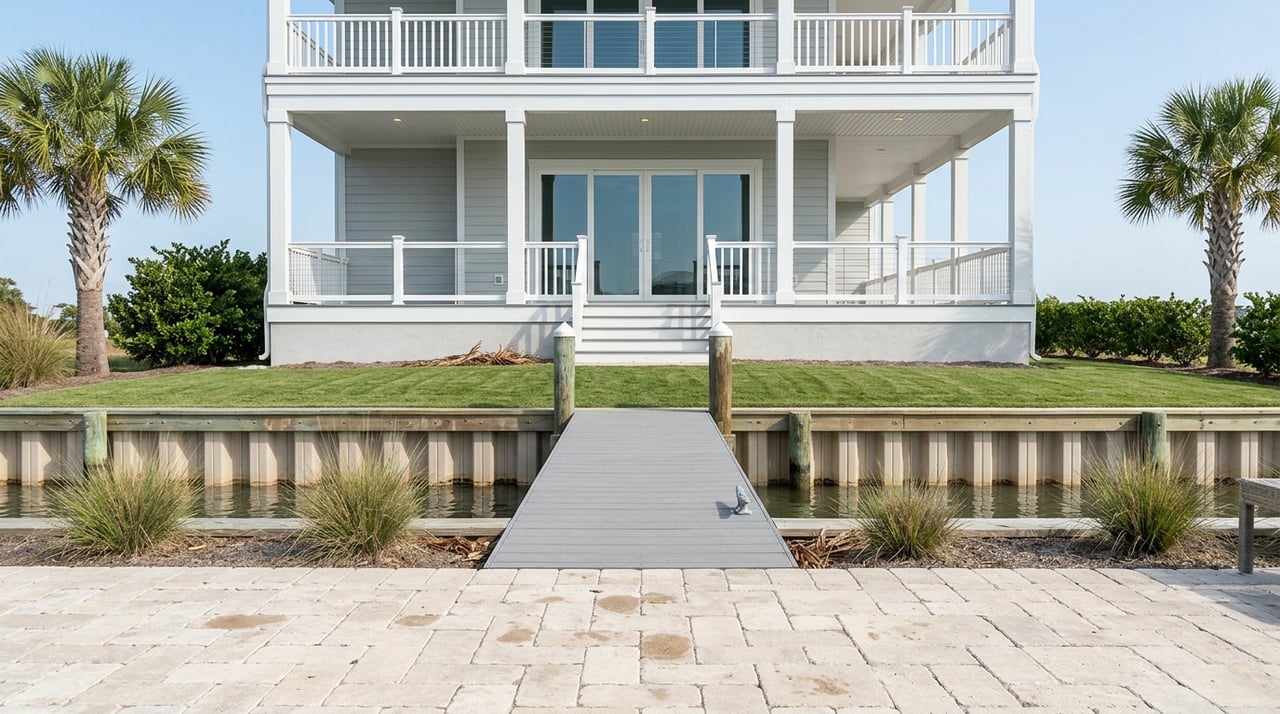
For many waterfront homes, the dock, pier, bulkhead, or walkway is part of the property’s appeal. It can also be one of the first places a buyer looks for deferred maintenance, storm history, or permit questions.
North Carolina DEQ’s Coastal Resources Commission rules make clear that bulkheads, piers, and docks are regulated structures. The state fee schedule lists a $474 general permit fee for bulkhead construction beginning July 1, 2025, which shows that even routine-looking shoreline projects can involve formal review.
The state’s dock and pier guidance also explains that some qualifying replacement work for damaged docks, piers, and walkways may be treated as repair and may be exempt from a CAMA permit if specific size and location limits are met. Even then, the work still has to comply with other state, federal, and local requirements.
Before your home hits the market, gather what you can for these features:
- Original permits, if available
- Repair invoices
- Storm repair records
- Dates of replacement or major work
- Notes showing whether structures were repaired or expanded
You do not need every document to sell, but the more organized you are, the easier it is to answer buyer concerns.
Focus on move-in-ready condition
In a market where buyers are taking time to evaluate homes, condition carries weight. Waterfront homes often face extra wear from moisture, salt air, wind, and sun, so buyers may pay close attention to visible maintenance items.
Walk through your property with fresh eyes and look for anything that suggests neglect. Peeling paint, weathered railings, worn decking, loose dock boards, stained ceilings, or stuck windows can distract from the water view and make buyers wonder what else needs attention.
A few smart pre-listing priorities may include:
- Cleaning decks, porches, and outdoor living areas
- Touching up paint where coastal wear is visible
- Repairing loose hardware, railings, or trim
- Replacing burned-out exterior bulbs
- Servicing doors, windows, and sliders
- Clearing any visible clutter around shoreline features
The goal is not to make the home look perfect. It is to make it feel cared for, functional, and easy for a buyer to picture enjoying right away.
Stage the waterfront lifestyle
When you sell a waterfront property, you are not only selling square footage. You are also selling the experience of being there. That means your prep should highlight the outdoor spaces and water views that make the home special.
Realtor.com’s real estate photography guide says photos are the most important feature in online home search. The guide recommends planning a shot list, opening curtains and blinds, cleaning decks and porches, clearing outdoor clutter, and using golden-hour exterior shots to make outdoor features stand out.
For a Hampstead waterfront home, that often means:
- Keeping sightlines to the water open
- Straightening outdoor furniture
- Cleaning dock lines and walkways
- Removing excess planters, hoses, or storage bins
- Making porches and patios feel simple and usable
This kind of prep helps buyers focus on what matters most. You want them to notice the view, the setting, and how the property supports everyday coastal living.
Price with today’s buyers in mind
Even a standout waterfront home can lose momentum if it is priced too aggressively at the start. In a market where homes are not all selling instantly, buyers often compare condition, location, water access, and paperwork readiness before deciding whether a home feels worth the asking price.
That is why pricing should reflect more than the view alone. Your list price needs to account for the current market pace, your home’s condition, and whether key items like flood documentation and shoreline records are ready for review.
A strong launch usually comes from a full strategy, not just a number. When your home is well prepared, clearly documented, and marketed with purpose, buyers have fewer reasons to hesitate.
Create a simple seller checklist
If you want to keep the process low-stress, break it into manageable steps. This simple checklist can help you prepare your Hampstead waterfront home to sell.
Pre-listing checklist
- Review your likely target listing date
- Gather elevation, flood, and insurance documents
- Check records for shoreline work, dock repairs, or bulkhead updates
- Decide which repairs to make before listing
- Allow time for any permit-related review if needed
- Deep clean interior and exterior spaces
- Remove clutter from decks, porches, and water-access areas
- Plan listing photography around clean views and strong natural light
- Work with your agent on pricing and launch timing
Make your launch count
A waterfront home in Hampstead can absolutely attract strong interest, but buyers usually want more than a pretty setting. They want clear answers, visible upkeep, and confidence that the home has been thoughtfully prepared for market.
If you are thinking about selling, starting early gives you more control over repairs, documentation, timing, and presentation. When you are ready for a smart, low-stress plan to bring your waterfront home to market, connect with Gwen Hydzik for local guidance and a strategy built around your property.
FAQs
What flood documents should you gather before selling a Hampstead waterfront home?
- You should try to gather an elevation certificate, flood insurance information, and any records tied to flood-related permits, repairs, or mitigation work.
What should you know about CAMA before listing a waterfront home in Hampstead?
- You should review whether past shoreline work, repairs, or water-access changes may have involved CAMA rules, since coastal areas and certain shoreline zones can require additional review.
What should you do if your Hampstead waterfront home has a dock or bulkhead?
- You should collect permits, invoices, storm repair records, and details about whether the structure was repaired, replaced, or expanded.
When is the best time to start preparing a Hampstead waterfront home to sell?
- Late winter is often a smart time to begin if you hope to list in spring, since buyer activity typically strengthens in early spring and permit review can take time.
Why does pricing matter for a Hampstead waterfront home sale?
- Pricing matters because buyers in a measured market often compare condition, documentation, and waterfront features closely instead of relying on the location alone.