Buying a piece of land and building your coastal home in Holly Ridge sounds simple until the details hit your desk. Between zoning, utilities, septic, stormwater, and floodplain rules, you face more decisions than most new builds inland. With the right plan, you can move from lot search to Certificate of Occupancy with fewer surprises. This guide walks you through the essentials so you can buy with confidence and start building on solid ground. Let’s dive in.
Start with zoning and jurisdiction
Before you fall in love with a lot, confirm who regulates it. Lots inside the Town of Holly Ridge or its ETJ follow town zoning and building rules. Parcels in unincorporated areas default to Onslow County’s rules. The Town’s Community Development page is your first stop for zoning verification, permits, and floodplain questions. You can find contacts, permit forms, and the zoning map on the town’s Planning and Zoning page.
- Check whether the parcel is inside town limits, the ETJ, or unincorporated county.
- Confirm the zoning district and allowed uses.
- Ask which permits will be required to build your intended home type.
Town staff can help you confirm jurisdiction and point you to the right submittals on the Town of Holly Ridge Planning and Zoning page.
Verify water and sewer early
Water and sewer can make or break your build. Onslow Water and Sewer Authority (ONWASA) is the primary regional provider, and Holly Ridge is within its service network. Some subdivisions use separate or private sewer systems. Always verify the exact provider for your lot and request a written utility letter.
- Ask for an “availability” or “intent to serve” letter for both water and sewer.
- Confirm tap locations, capacity fees, and any service extension costs.
- If the parcel is not on sewer, plan for a septic system and get county approvals.
To see service areas and start your provider check, use ONWASA’s “Who’s My Sewer Provider” page. The Town’s building checklist also requires proof of water and sewer availability with your permit submittal. Review the town’s Building Permit Requirements so you can gather the right documents up front.
Plan for septic or a well
If public sewer is not available, you will need county approvals for an onsite wastewater system. Onslow County Environmental Health performs soil evaluations and runs a three‑step permit sequence for septic: Improvement Permit (IP), Construction Authorization (CA), and Operation Permit (OP).
- Schedule a soil evaluation through Environmental Health and mark property corners before the visit.
- If the site passes, you receive an IP, then you can apply for the CA so a contractor can install the system.
- If soils are unsuitable, expect to discuss engineered alternatives and added cost.
You can review the process and applications on the county’s Soil Evaluations page. For budgeting, the county’s fee schedule lists an IP for a single dwelling at about 300 dollars, with CA fees that vary by system type, and a well construction permit with initial sampling at about 400 dollars. Check the latest numbers in the Environmental Health fee schedule. If you need a private well, learn the steps and sampling rules on the county’s Wells page.
Stormwater and erosion rules
In North Carolina, land disturbance of one acre or more generally requires coverage under the NCG010000 Construction Stormwater General Permit and an approved Erosion and Sediment Control Plan. You submit your Notice of Intent through the state’s AccessDEQ system and should allow several weeks for plan review and coverage to be issued.
- Ask early whether your project meets the one‑acre threshold or any local triggers.
- Build time into your schedule for plan approvals and stormwater controls.
- Keep inspection records and maintain erosion measures during construction.
Get the program details and submittal steps from NCDEQ’s NPDES Construction Program. Holly Ridge sits in a coastal county where some smaller residential projects can trigger additional stormwater controls even below one acre. Review the coastal residential thresholds in 15A NCAC 02H and confirm applicability for your site.
Floodplain and wetlands checks
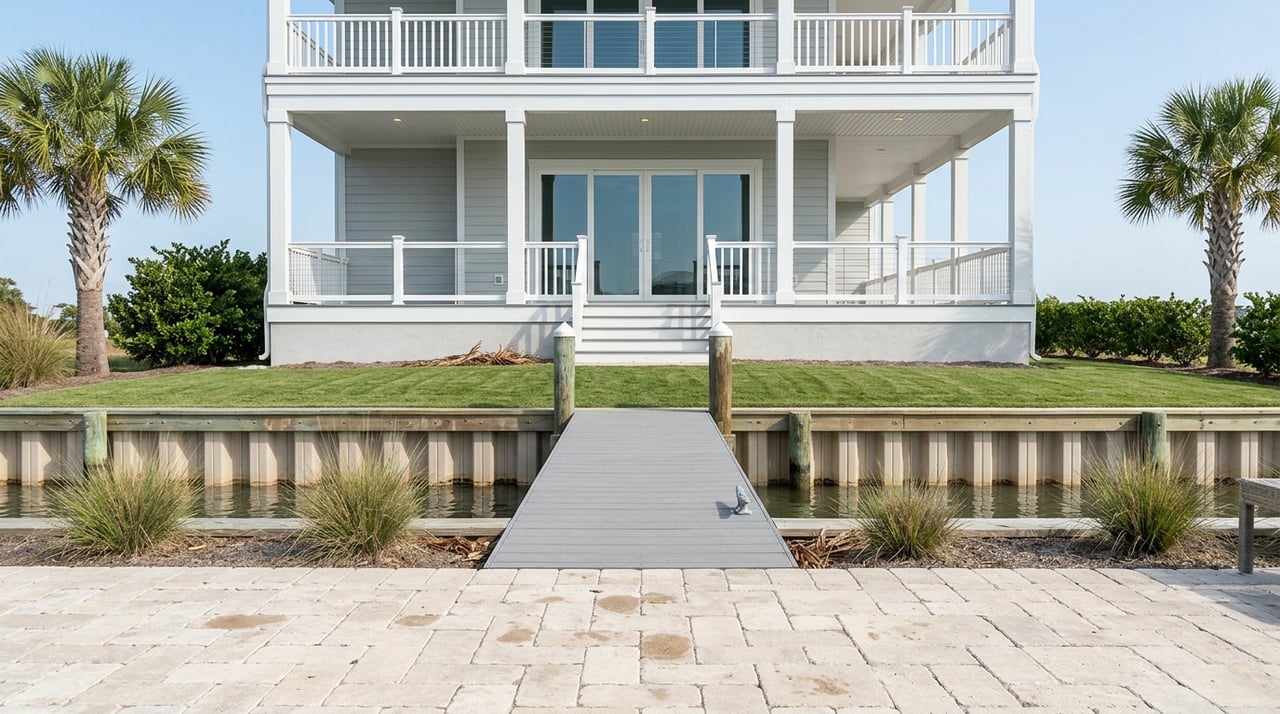
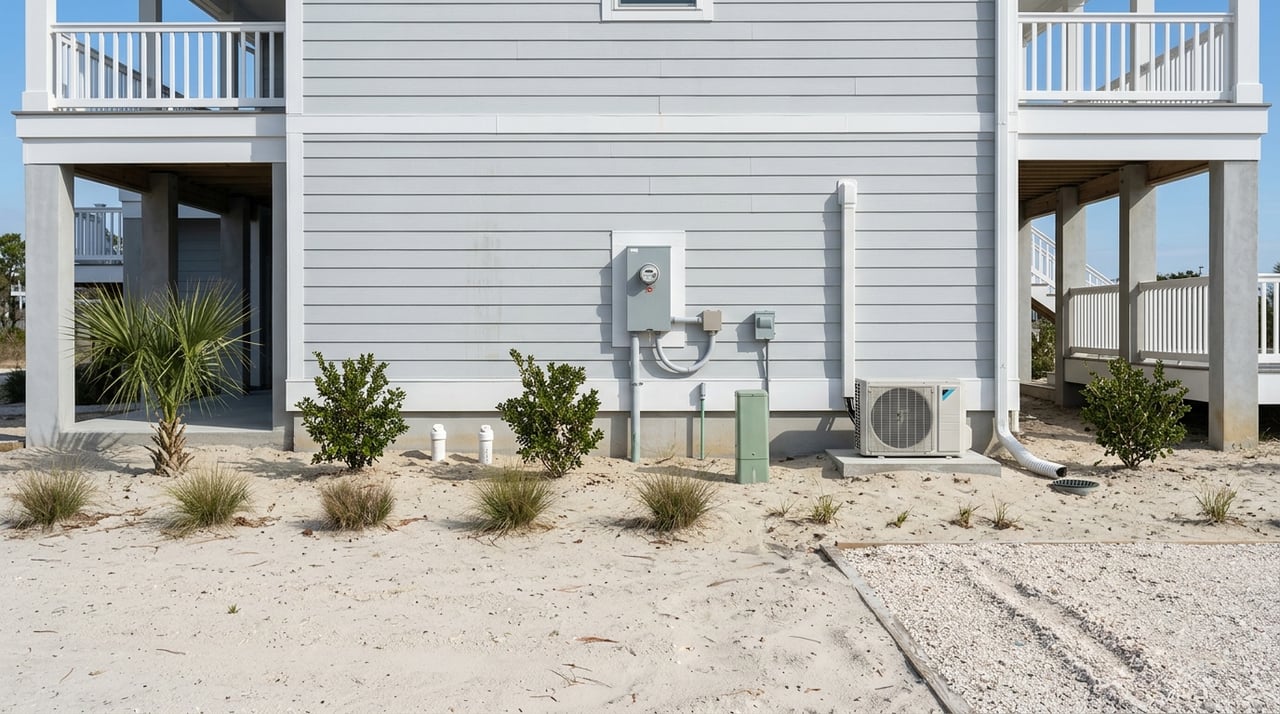
Near the coast, floodplain rules shape both design and timeline. If your lot is in a Special Flood Hazard Area, the Town requires a Floodplain Development Permit. New construction often must elevate the lowest floor above the base flood elevation plus two feet. Elevation certificates and a recorded nonconversion agreement are common parts of the file.
- Pull the FEMA FIRM panel and ask the town whether your site sits in the regulatory floodplain or floodway.
- Budget for elevated foundations and surveys if required.
- If wetlands are mapped nearby, consult with the Town or a specialist before grading or filling.
You can review permit requirements and forms in the Town’s Floodplain Development Application Packet.
Driveway access on state roads
If your lot will access a state‑maintained road, you will likely need an NCDOT driveway permit before building the approach. Simple reviews can take around a month, while more complex access plans take longer. Many jurisdictions will not finalize your Certificate of Occupancy until permitted work in the right‑of‑way is complete.
- Contact the local NCDOT district early to understand design conditions.
- Submit the permit and plan for any required turn radii or drainage upgrades.
- Coordinate timing so driveway approvals do not delay your CO.
Read the steps in NCDOT’s Policy on Street and Driveway Access.
Modular and manufactured homes
Modular homes and HUD‑code manufactured homes are permitted and inspected differently. Modular units are built to North Carolina codes. Both options require local building permits, code‑compliant foundations or tie‑downs, and inspections by local officials. The Town’s checklist also calls for specific as‑built and foundation surveys during the process.
- Confirm whether your home is modular or HUD‑code and follow the correct installation standards.
- Use licensed or bonded set‑up contractors as required.
- Coordinate schedules tightly so site work, utility hookups, and inspections align with delivery.
You can verify modular set requirements through the NC Office of State Fire Marshal’s modular set guidance.
Typical timelines and costs to plan for
Every site is different, but a realistic sequence can keep you on track. Start with the checks that drive everything else, then move to building permits and construction.
- Zoning and utility verification. Confirm jurisdiction, zoning, and utility provider letters.
- Septic and well approvals. Order the soil evaluation and apply for the IP and CA for septic, plus a well permit if needed.
- Stormwater and erosion control. If your project meets thresholds, submit the Erosion and Sediment Control Plan and eNOI for NCG01.
- Building permit, driveway permit, and floodplain permit if required.
- Site prep, foundation, rough‑ins, and inspections, followed by final surveys and CO.
For baseline fees, use the county’s Environmental Health fee schedule to budget septic and well application costs. Schedule drivers often include soil evaluations, stormwater plan reviews, and any floodplain approvals.
Common lot traits in Holly Ridge
Holly Ridge sits in the coastal plain where soils are often sandy with variable seasonal water tables. A site that looks dry in summer can still fail a soil evaluation, so never skip the county review. Many in‑town subdivision lots are smaller, while rural parcels in the county can span multiple acres. Always confirm acreage, recorded plats, and easements before planning your building envelope.
- Expect flat to gently rolling topography and watch for mapped wetlands near creeks and tidal areas.
- Assume a site‑specific septic evaluation is needed even if a neighbor’s lot passed.
- Read HOA or recorded covenants for home type restrictions and minimum sizes.
Buyer due diligence checklist
Use this list to move from interest to offer with fewer surprises.
- Confirm jurisdiction and zoning with the Town or County. Start on the Town Planning and Zoning page.
- Request water and sewer availability or intent‑to‑serve letters from ONWASA or the named provider. Ask about tap fees and any line extensions.
- Order a soil evaluation through Onslow County Environmental Health and make septic approval a contract contingency. See the Soil Evaluations process.
- If no sewer is available, budget septic system costs and check the county’s fee schedule for application fees.
- Ask the Town whether the parcel is in a floodplain and whether you will need a Floodplain Development Permit. Review the Floodplain Packet.
- Determine if stormwater permits will apply based on disturbance and coastal thresholds. Start with NCDEQ’s NPDES Construction Program.
- If your access is to a state road, contact NCDOT to scope a driveway permit. See the Driveway Access Policy.
- Collect recorded plats, any HOA documents, and deed restrictions to check for building type limits and setbacks.
Quick red flags to pause on
- No current soil evaluation or septic permits for a lot without sewer.
- A mapped flood zone that will require elevating BFE plus two feet and significant survey work.
- Utility letters that show no service availability or long extensions with high costs.
- Projects that trigger state stormwater permits without schedule or budget room for plan approvals and site controls.
Building your new home should feel exciting, not exhausting. If you want a clear, step‑by‑step path through Holly Ridge zoning, utilities, septic, stormwater, and floodplain rules, connect with a local guide who does this every day. Reach out to Gwen Hydzik to map your due diligence and turn the right lot into the right home.
FAQs
What permits do you need to build a home in Holly Ridge?
- You will confirm zoning, secure building and floodplain permits with the Town if applicable, obtain septic and well permits from Onslow County if needed, and add stormwater and NCDOT driveway permits when thresholds apply.
How do you confirm water and sewer for a Holly Ridge lot?
- Contact the provider and request a written “availability” or “intent to serve” letter, starting with ONWASA’s service info for Holly Ridge.
What is the septic permitting process in Onslow County?
- The county runs a three‑step sequence of Improvement Permit, Construction Authorization, and Operation Permit following a soil evaluation.
When do you need a stormwater permit near the coast?
- Disturbance of one acre or more requires NCG01 coverage, and some smaller coastal projects can trigger additional residential stormwater rules, so confirm early with NCDEQ.
Do Holly Ridge flood zones require elevated construction?
- If your lot is in a Special Flood Hazard Area, plan for a Floodplain Development Permit and to elevate the lowest floor above base flood elevation plus two feet, with elevation certificates.
Do you need an NCDOT driveway permit for a state road lot?
- Yes, access to a state‑maintained road typically requires an NCDOT driveway permit, and final CO may depend on completing permitted right‑of‑way work.