Ever spot “deeded beach access” in a Topsail Beach listing and wonder what it really gets you? You are not alone. When you are comparing second-row homes or canal lots, that phrase can be the difference between a smooth beach day and a long walk with gear. In this guide, you will learn what deeded beach access means, how it differs from public access, how to confirm it in Pender County records, and what red flags to watch. Let’s dive in.
What deeded beach access means
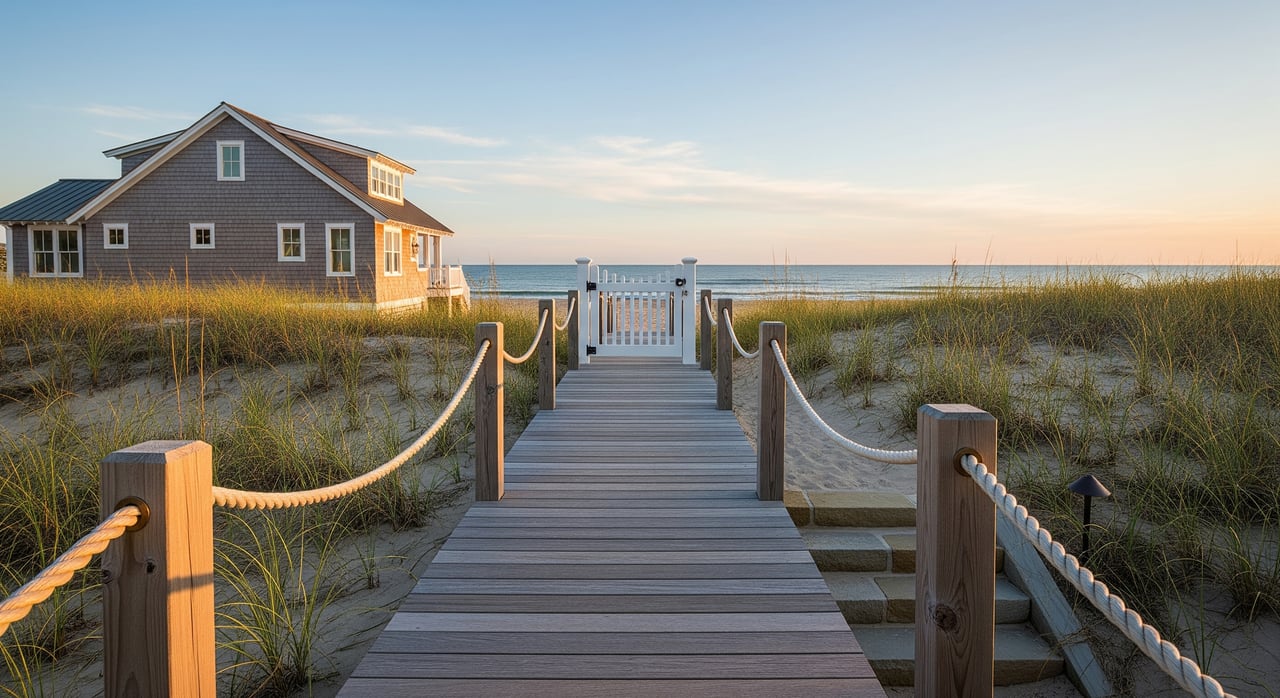
Deeded beach access is a recorded property right that lets specific owners use a defined path or strip to reach the beach. Because it is recorded, the right runs with the land and transfers to future owners. The scope depends on the exact language in the recorded document.
In Topsail Beach, deeded access can appear in a few ways:
- A narrow fee-simple strip or “access parcel” that certain lots own.
- An appurtenant easement that benefits defined lots and transfers with those lots.
- An in-gross easement held by a person or association.
- A reserved easement the seller kept when conveying other property.
What matters most is the recorded language. It can define whether access is pedestrian-only, golf cart or vehicle-capable, how wide it is, and who maintains it.
How it shows up in records
In Pender County, deeds, plats, and easements are recorded with the Register of Deeds. You may see confirming phrases like “together with,” “appurtenant easement,” “perpetual easement for ingress and egress to the foreshore,” “strip of land,” or “right-of-way.” The legal description may reference metes and bounds or a recorded plat with book and page or instrument number.
Plats and surveys often label access as “Beach Access,” “Access Easement,” or “Ingress/Egress.” A current survey is the best way to verify the location and width and to check for encroachments or obstructions.
Private vs public access in Topsail Beach
Deeded access is private. It benefits the defined owners and can be limited by recorded rules or HOA regulations. Maintenance and enforcement are typically handled by the owner group or HOA.
Public access points are maintained by the Town of Topsail Beach for use by anyone. Public rules and parking are set by municipal ordinances. Both types can be close to your property, but they work very differently.
- Private access: limited to beneficiaries, private rules may apply, and parking is rarely included unless stated.
- Public access: open to all, maintained by the town, and subject to public signage and ordinances.
How to verify deeded access before you buy
Treat “deeded beach access” in a listing as a starting point, not proof. The sure way to confirm is to find the right language in recorded documents and back it up with a title commitment and a survey.
Documents to request
- Current deed and prior deeds in the chain of title.
- Any recorded easement documents or declarations.
- Recorded subdivision plat and a recent boundary/improvement survey.
- HOA or POA Covenants, Conditions & Restrictions (CC&Rs) and rules.
- Title commitment or preliminary title report, including the exceptions page.
- Any closing documents that will be recorded at settlement.
- Pender County Register of Deeds records and the county GIS or plat map layers.
- Town information identifying public beach access points.
Where to look and what to look for
- Deed clauses: look for “together with,” “appurtenant easement,” or “perpetual easement for ingress and egress to the foreshore.”
- Legal description: confirm a metes-and-bounds callout or a reference to a recorded plat and instrument number.
- Plat notes: labels such as “Beach Access,” “Access Easement,” or “Ingress/Egress.”
- Title commitment exceptions: verify the easement is listed and note any restrictions or conflicts.
- CC&Rs: check rules on use, hours, parking, and maintenance obligations.
- Survey: confirm the path location, width, and any encroachments or blockages.
A practical step-by-step workflow
Ask the listing agent for the deed, recorded plat, current survey, and HOA documents. Use remarks as clues, not proof.
Order a title commitment and read Schedule B for easements, rights of way, and exceptions.
Pull the recorded instruments from the Pender County Register of Deeds to confirm exact language and recording references.
Get a current boundary survey that shows the access and distances from your lot.
Compare with the town’s public access list to confirm whether the access is private or public.
If any language is unclear or access is crucial to your decision, consult a North Carolina real estate attorney or request a title company opinion.
Common limitations and costs to note
Not all access is equal. Some easements are pedestrian-only, with no vehicles or carts. Others are narrow and do not allow passing side by side. Parking is often excluded unless it is clearly granted.
HOA or POA documents may set hours, guest rules, and maintenance obligations. If you benefit from a shared access, you may share costs for upkeep, signage, or liability coverage. Read the documents carefully so you know what you are getting and what you owe.
Shoreline dynamics and real-world use
On a barrier island, the shoreline can shift due to erosion, accretion, and storms. Recorded rights normally remain intact unless changed by legal action or agreement. Still, the path might be temporarily blocked or less practical after a storm. A recent survey and on-site walk-through help you understand current conditions and whether the access is usable today.
Quick due diligence checklist
Before you make an offer:
- Get the deed, plat, survey, and HOA/POA documents from the listing side.
- Confirm that “deeded access” appears in recorded documents.
- Identify nearby public access points for comparison.
During due diligence:
- Order a title commitment and read Schedule B for easements and exceptions.
- Obtain a current survey that shows the access location and width.
- Pull the actual instrument creating the access and note book/page or instrument number.
- Confirm parking and maintenance responsibilities in CC&Rs or the easement document.
- Walk the access to verify it exists and is not blocked.
Before closing:
- Confirm the title policy will insure the access or clearly list any exceptions.
- Verify the deed at closing includes the promised access rights or that a new easement will be recorded.
- If access is essential, consider holding back funds or requiring a seller warranty until the title issue is resolved.
When to bring in professionals
- Title company: for the commitment, exceptions, and final title insurance.
- Licensed surveyor: to locate the access on the ground and identify encroachments.
- North Carolina real estate attorney: for ambiguous language, prescriptive claims, or conflicts among instruments.
- Town staff and GIS resources: to distinguish private access from public access points and to understand any municipal easements.
Final thoughts
Deeded beach access in Topsail Beach can add real convenience and value, but the details matter. Clear recorded language, a clean title commitment, and a current survey are your best tools to avoid surprises. If you want help spotting strong access rights and navigating the records, you can count on a local, hands-on approach.
Ready to compare properties with confidence or verify access on a home you love? Reach out to Gwen Hydzik for local guidance and buyer representation tailored to Topsail Beach and the Pender County coast.
FAQs
What is deeded beach access in Topsail Beach?
- It is a recorded property right, such as an easement or fee-owned strip, that allows defined owners to use a specific path or area to reach the beach and runs with the land.
How do I confirm a listing’s “deeded access” claim?
- Review the deed, recorded easement or plat, and a title commitment, then pull the instrument from the Pender County Register of Deeds and verify location with a current survey.
What is the difference between private deeded access and public access?
- Private access is limited to specified owners and governed by recorded documents or HOA rules, while public access points are open to everyone and maintained by the Town of Topsail Beach.
Does deeded access include parking or golf cart use?
- Only if the recorded document or CC&Rs say so; many easements are pedestrian-only and do not include parking or vehicle rights.
What if storms or erosion block the access path?
- The recorded right usually remains, but practical use can be limited; confirm current conditions with a survey and on-site visit and consult professionals if changes affect access.
Who maintains a private beach access in Topsail Beach?
- Maintenance is defined in the easement or CC&Rs and may fall to the benefiting owners, an HOA, or another defined party; review documents to understand your obligations.